 Emanuele Ceccherini
Autotorino Evolution Advisor
Turning EV curiosity into confidence
The problem
EV awareness in Italy was growing — adoption wasn't. Users were curious but stuck: the gap between "interested" and "convinced" was filled with unanswered questions about real-world costs, charging logistics, and whether an EV actually fit their life. Autotorino, Italy's leading dealership, needed something to close that gap — without a salesperson in the room.
The solution
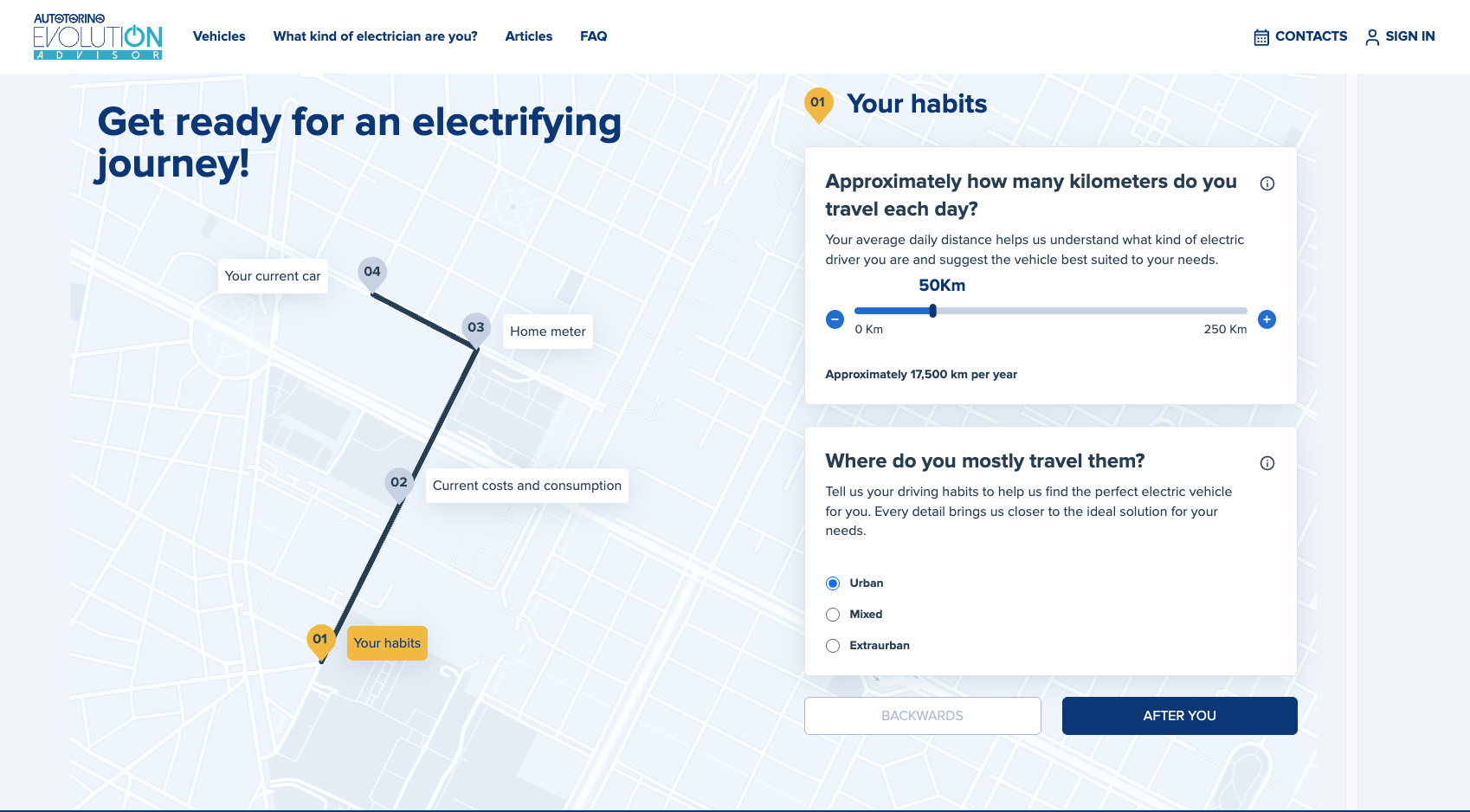
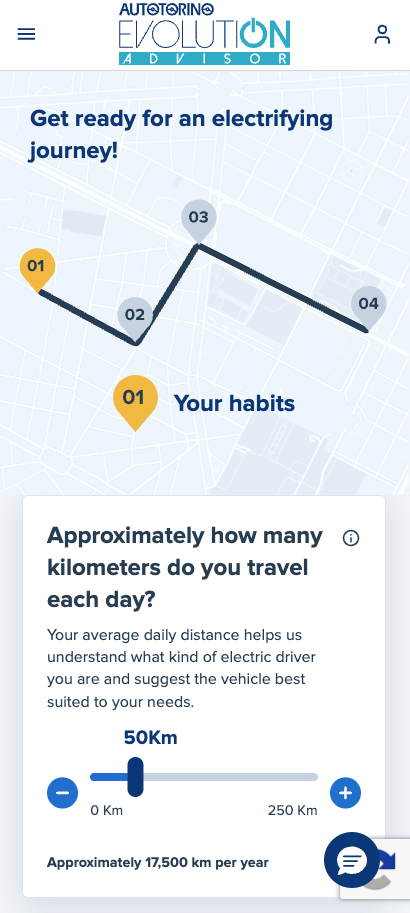
A guided advisor that starts with the user's life, not the car catalogue. Four questions about daily habits, current costs, home setup, and existing vehicle — then a personalised recommendation with projected savings and a charging feasibility assessment. Every output updates live as users tweak their inputs.
Four questions that know your situation
No car specs upfront. No overwhelming forms. Four steps that start from what users already know — their habits, costs, and home setup — and build a complete picture before surfacing any recommendation. A conversation about their life, not a configuration wizard.
Step 1 captures daily distance and route type. Step 2 converts current fuel spend into a savings baseline. Step 3 reads home power setup — the detail most EV advisors skip, but the one that determines real charging feasibility. Step 4 adds the current vehicle for like-for-like comparison and incentive eligibility. Each answer feeds the next; the output only appears once the picture is complete.
See your savings, pick your car
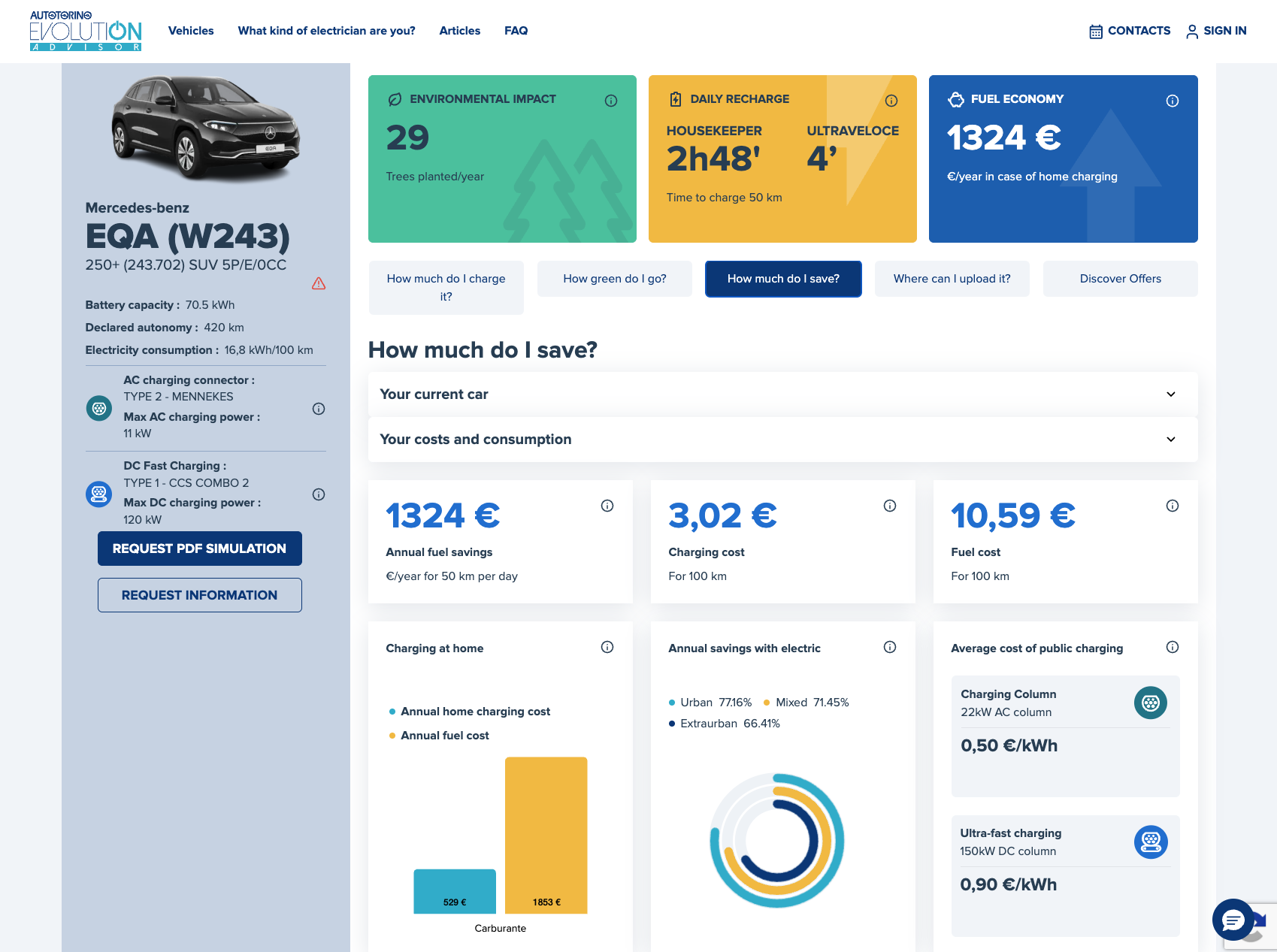
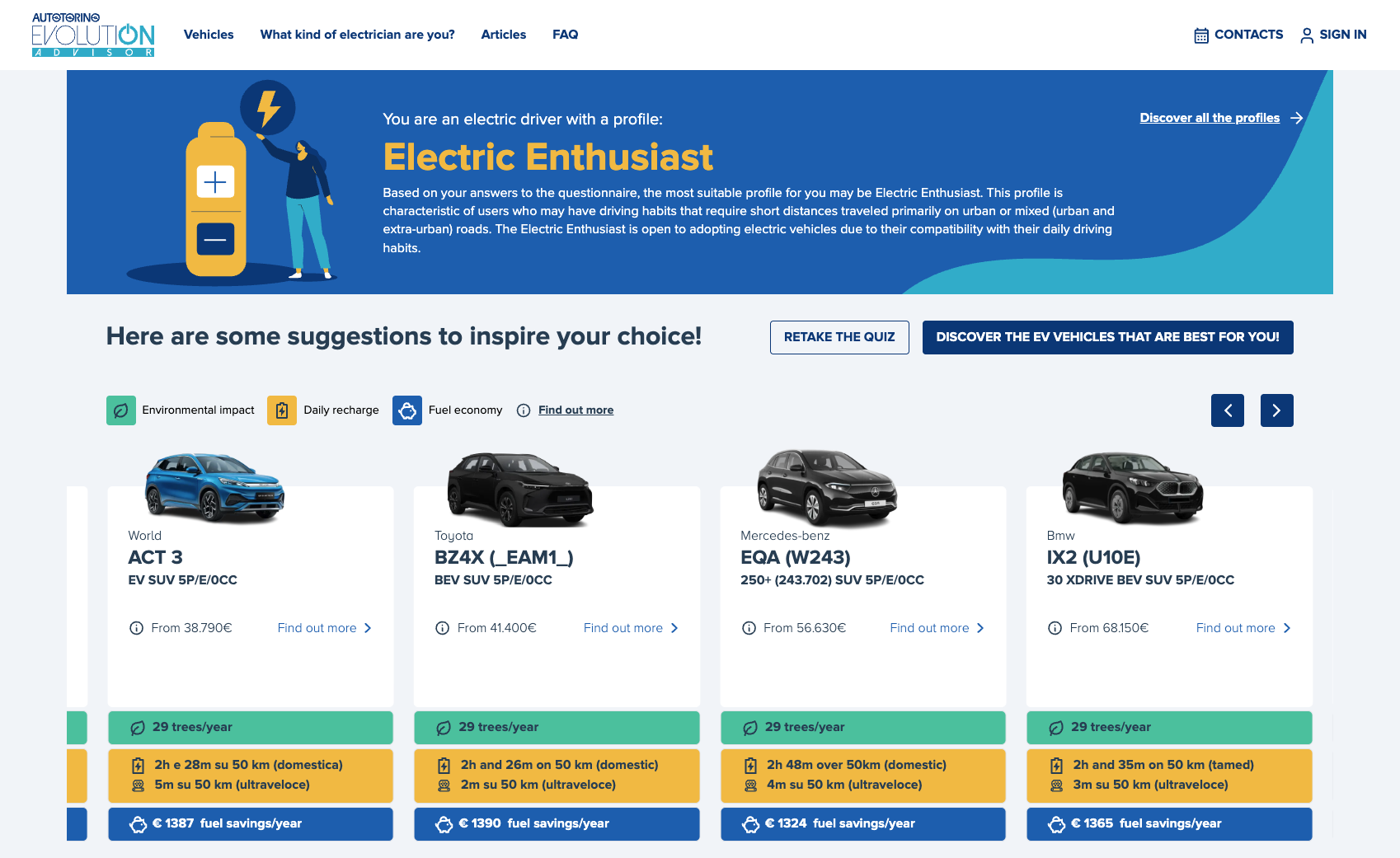
The survey ends where most advisors begin: a results page built around the user's specific inputs — matched EV recommendations, a live savings breakdown, and a side-by-side comparison anchored to what they actually spend today.
Savings calculator
Fuel differential, home charging cost, Ecobonus incentives — projected from the user's actual inputs, not market averages. Every value editable: adjust a number, watch the breakdown update in real time. The goal wasn't a figure — it was understanding.
Vehicle comparison
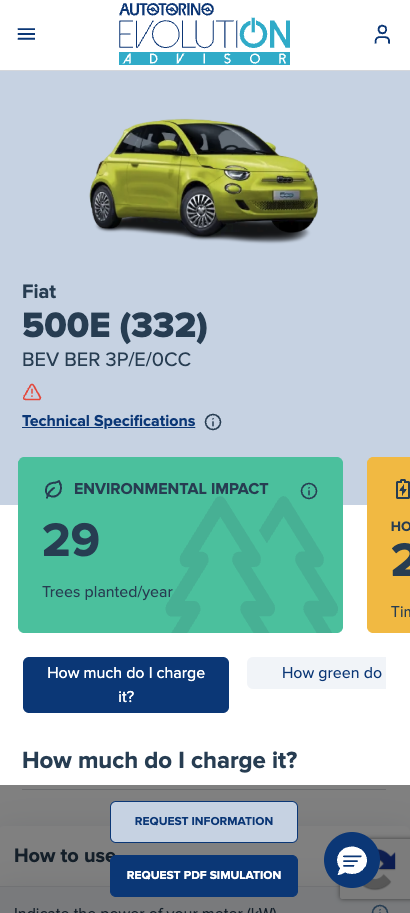
Recommended EVs compared side by side — range, charge time, price, incentives, projected annual saving. All anchored to the user's current vehicle, not a market benchmark. Not a catalogue: a shortlist built around one specific person.
Charging answers, before users ask
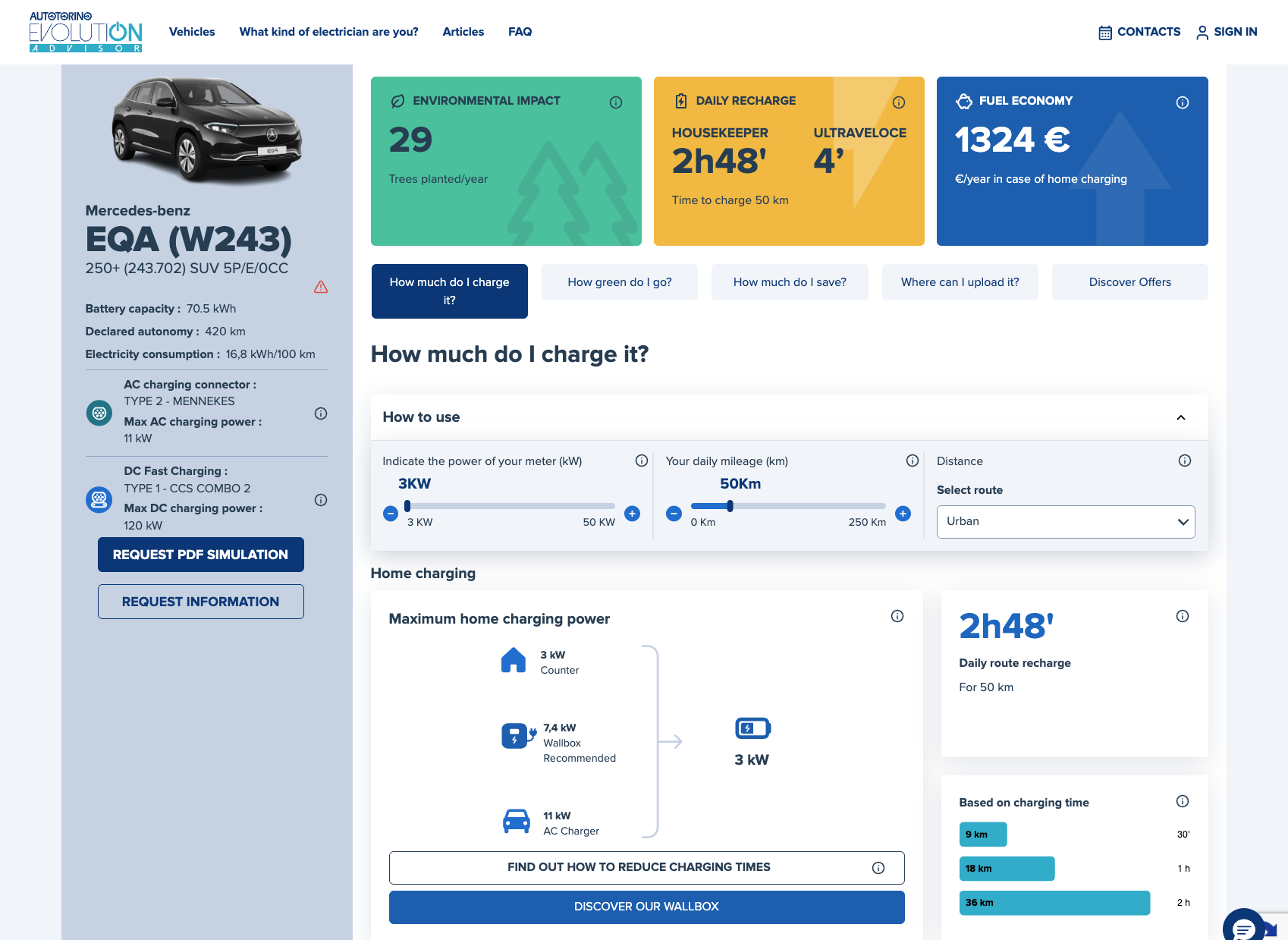
Range anxiety is mostly charging anxiety. The platform addressed it directly — not with reassurance copy, but with actual numbers specific to the user's setup.
Home meter data translated directly into maximum charging power and a full-charge time for each recommended vehicle — not a generic estimate, a number based on the user's actual setup. A charge time estimator let users simulate different scenarios: overnight at home, a fast charger at lunch, a motorway top-up. Public charging was mapped to their typical routes. Across all three panels, the same mechanic: change a variable, results update immediately. The platform became something to explore — not a result to read once and close.
What this project sharpened
Winning is designing
The pitch was the first design deliverable. Presenting the concept as a user journey — not a feature list — is what won the tender. Storytelling the experience before building it is a design skill, not a sales skill.
Live data raises the stakes
When every input change updates the results in real time, every edge case becomes immediately visible. Designing for live data means designing for the full input space — not just the happy path.
Complexity needs a guide
An EV advisor could easily become overwhelming. The step-by-step flow was the product strategy as much as the UX choice. Breaking a complex financial and logistical decision into four familiar questions made the platform feel like a conversation, not an interrogation.